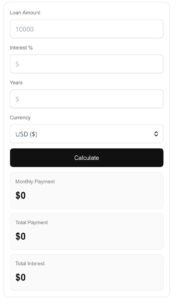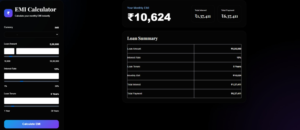
Whether you’re taking a loan, planning a savings goal, or evaluating an investment opportunity, understanding interest is essential. An Interest Calculator helps borrowers and investors quickly estimate how much interest they will pay or earn over time.
Interest Details
Instead of manually calculating complex formulas, an interest calculator provides instant and accurate results, helping users make informed financial decisions. In today’s fast-paced financial environment, borrowers rely on these calculators to compare loan options, estimate repayment costs, and manage budgets more effectively.
This guide explains what an interest calculator is, how it works, its benefits, and how borrowers can use it to make smarter financial choices.
What Is an Interest Calculator?
An Interest Calculator is a financial tool that calculates the amount of interest payable on a loan or earned on savings and investments based on factors such as principal amount, interest rate, and time period.
It simplifies financial planning by providing quick and accurate estimates without requiring advanced mathematical knowledge.
Most calculators support both:
- Simple Interest calculations
- Compound Interest calculations
They are commonly used for:
- Personal loans
- Home loans
- Car loans
- Fixed deposits
- Savings accounts
- Investment planning
How Does an Interest Calculator Work?
An interest calculator uses financial formulas to determine the total interest amount over a specified period.
The calculation generally requires:
Principal Amount
The original amount borrowed or invested.
Interest Rate
The annual percentage rate (APR) charged or earned.
Time Period
The duration for which the money is borrowed or invested.
Compounding Frequency (For Compound Interest)
How often interest is calculated and added to the balance.
Examples include:
- Annually
- Semi-annually
- Quarterly
- Monthly
- Daily
The calculator processes these values instantly and displays:
- Total Interest
- Total Repayment Amount
- Maturity Value
- Monthly Payment Estimates (if applicable)
What Is Simple Interest?
Simple interest is calculated only on the original principal amount.
Simple Interest Formula
Interest = Principal × Rate × Time
Example
Suppose you borrow:
- Principal: $10,000
- Interest Rate: 5%
- Time: 3 Years
Simple Interest:
$10,000 × 5% × 3 = $1,500
Total Repayment:
$11,500
Simple interest is commonly used for:
- Short-term loans
- Basic lending agreements
- Educational calculations
What Is Compound Interest?
Compound interest is interest calculated on both the principal and previously accumulated interest.
This is often called “interest on interest.”
Why Compound Interest Matters
Compound interest can significantly increase both:
- Loan costs for borrowers
- Returns for investors
Example
Investment Amount: $10,000
Interest Rate: 5%
Compounded Annually
Time: 3 Years
Instead of earning $1,500 as with simple interest, compound interest generates slightly higher returns because interest is added back into the balance each year.
Many banks, investment firms, and savings accounts use compound interest calculations.
Why Should Borrowers Use an Interest Calculator?
An interest calculator helps borrowers understand the real cost of borrowing before committing to a loan.
Key Benefits
Faster Financial Planning
Get instant results without manual calculations.
Compare Loan Offers
Evaluate multiple lenders and choose the most affordable option.
Budget Management
Estimate monthly payments and repayment obligations.
Avoid Hidden Costs
Understand total interest expenses before signing agreements.
Better Decision-Making
Make informed choices regarding loan amounts and repayment periods.
For borrowers, transparency is one of the biggest advantages of using an interest calculator.
How to Use an Interest Calculator Step by Step
Using an interest calculator is simple and typically takes less than a minute.
Step 1: Enter the Principal Amount
Input the amount you plan to borrow or invest.
Step 2: Enter the Interest Rate
Provide the annual interest rate.
Step 3: Select the Time Period
Choose the loan term or investment duration.
Step 4: Choose Interest Type
Select:
- Simple Interest
- Compound Interest
Step 5: Click Calculate
The calculator instantly displays:
- Interest Amount
- Total Balance
- Repayment Figures
This allows users to evaluate different financial scenarios quickly.
What Factors Affect Interest Calculations?
Several variables directly influence the amount of interest paid or earned.
Loan Amount
Higher borrowing amounts generally result in higher interest costs.
Interest Rate
Even small rate differences can significantly impact total repayment.
Loan Duration
Longer loan terms often lead to more interest accumulation.
Compounding Frequency
More frequent compounding increases total interest earned or owed.
Payment Schedule
Regular repayments can reduce outstanding balances and overall interest costs.
Understanding these factors helps borrowers minimize expenses and improve financial outcomes.
Interest Calculator vs Manual Calculation
Most financial experts recommend calculators because they eliminate human error.
| Feature | Interest Calculator | Manual Calculation |
|---|---|---|
| Speed | Instant | Slow |
| Accuracy | High | Depends on user |
| Ease of Use | Very Easy | Moderate |
| Scenario Comparison | Simple | Time-consuming |
| Error Risk | Low | Higher |
For modern borrowers, calculators provide a more efficient and reliable solution.
Common Uses of an Interest Calculator
Interest calculators are valuable in various financial situations.
Personal Loans
Estimate repayment costs before borrowing.
Home Loans
Calculate long-term mortgage interest obligations.
Car Financing
Understand total vehicle financing expenses.
Savings Accounts
Forecast future savings growth.
Fixed Deposits
Estimate maturity amounts accurately.
Investment Planning
Compare different investment opportunities and returns.
These applications make interest calculators one of the most versatile financial tools available.
Frequently Asked Questions
Is an Interest Calculator Accurate?
Yes. Most calculators use standard financial formulas and provide highly accurate estimates when correct inputs are entered.
Can I Calculate Both Loan and Savings Interest?
Yes. Interest calculators work for loans, savings accounts, fixed deposits, and investment products.
What Is Better: Simple or Compound Interest?
For borrowers, simple interest generally results in lower costs. For investors, compound interest often produces higher returns over time.
Do Banks Use Compound Interest?
Many banks use compound interest for savings accounts, fixed deposits, and some loan products.
Can an Interest Calculator Help Compare Loans?
Absolutely. Borrowers frequently use interest calculators to compare rates, repayment terms, and total borrowing costs.
Conclusion
An Interest Loan Calculator is one of the most practical financial tools for borrowers and investors alike. It provides quick, accurate, and transparent calculations that simplify financial planning and improve decision-making.
Whether you’re considering a personal loan, home loan, car financing, savings account, or investment opportunity, understanding how interest works can save money and reduce financial stress.
Before making any borrowing or investment decision, use an interest calculator to evaluate costs, compare options, and choose the financial path that best supports your goals.
Take Action Today
Use an Interest Calculator before applying for any loan or investment product. A few seconds of calculation can help you make smarter financial decisions and potentially save thousands over time.